
Mid-Facial Masterclass
A Structural Framework for Mid-Face Volume and Lift
Structural Assessment Before Correction
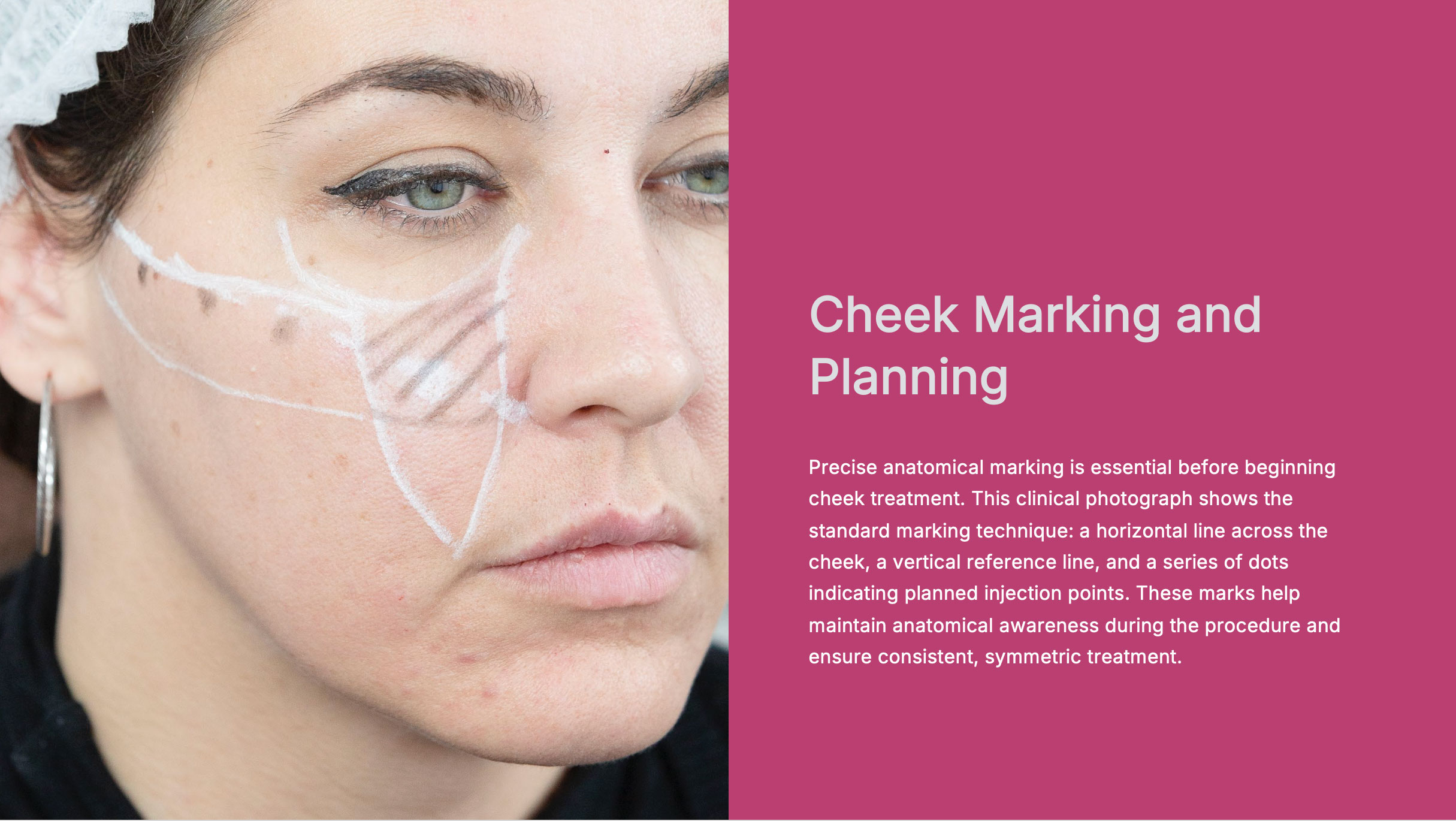
They are often a support problem.
Instead of chasing lines, you assess structural deficiency first.
Comprehensive Mid-Face Training
Risk reduction is embedded throughout.
You learn where danger zones lie, why bolus placement requires respect, and how to avoid over-projection that flattens the anterior face. Lifting is framed as vector-based support, not excess volume.
The emphasis is on proportion.
Cheek projection must harmonise with chin position, lip support, and orbital contour. Volume without balance creates heaviness. Lift without planning creates irregularity.
The module guides you through:
- Mid-face anatomy and vascular awareness
- Layer-by-layer depth considerations
- Product selection based on G prime and lifting capacity
- Safe set-up and procedural planning
- Cheek volumisation versus cheek lifting — understanding the difference
- Needle versus cannula decision-making
- Indirect improvement of nasolabial folds
- Structured demonstration of placement and technique
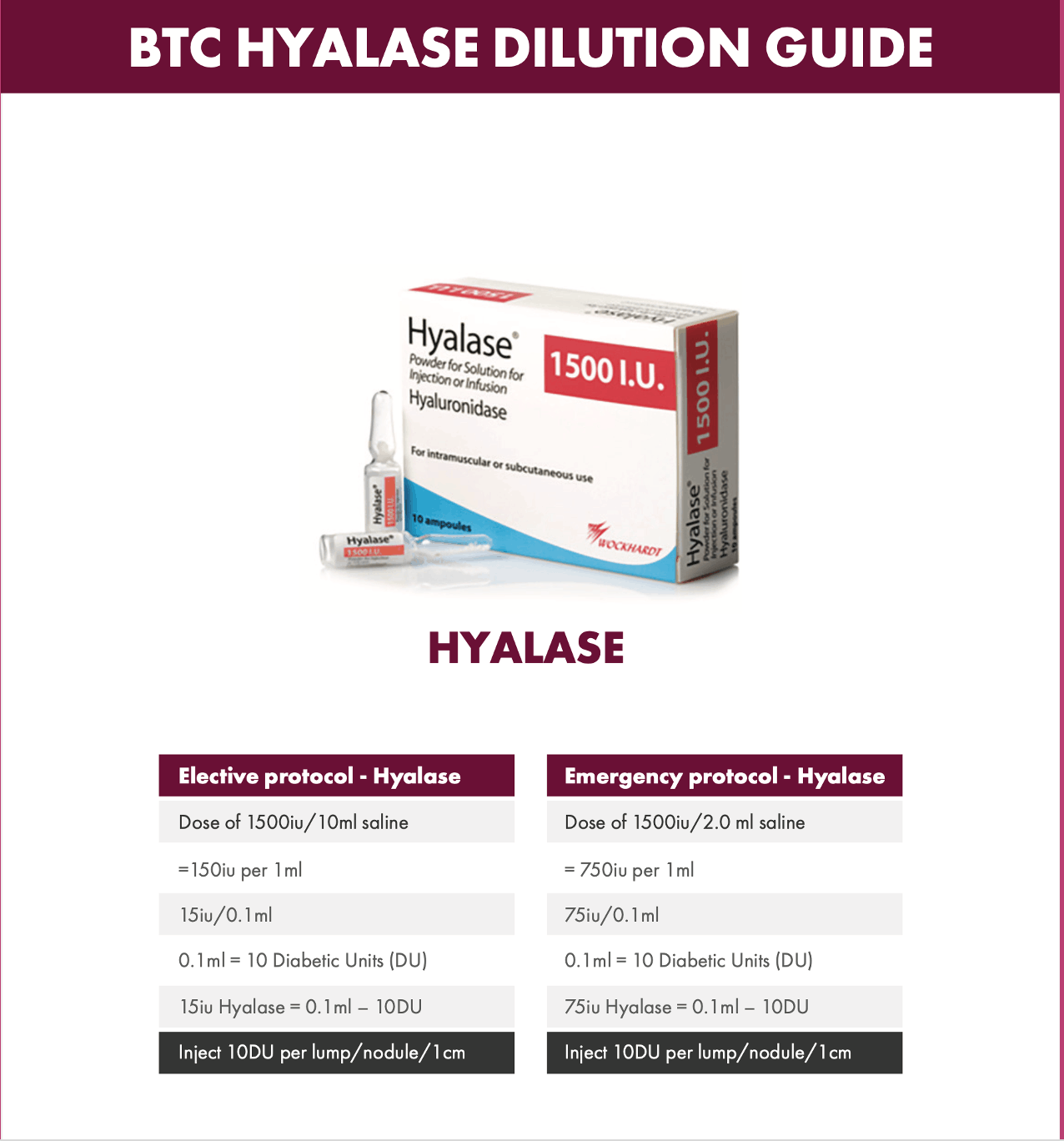
- Hyalase preparedness and reversal protocols
Logical Clinical and Financial Expansion
Financially, mid-face treatments represent logical clinical progression.
Many patients presenting for upper face toxin or lip enhancement display:
- Early mid-face volume loss
- Deepening nasolabial folds
- Flattening of the malar prominence
- Lower face descent
Instead of layering superficial corrections repeatedly, you can address structural support once appropriately trained.
This increases treatment value per consultation while maintaining ethical integrity.
Patients who experience structural mid-face improvement often require fewer superficial filler corrections. They return for maintenance rather than correction of poor planning.
This improves predictability.
Rather than relying on constant new patient acquisition, you build:
Comprehensive consultation → Structural assessment → Phased treatment plan → Review → Maintenance cycle.
The inclusion of Hyalase training is not an afterthought. It reinforces accountability. Advanced filler work should always be paired with dissolution readiness. Knowing how to reverse creates confidence grounded in responsibility.
What You Become After Completion
By completing this masterclass, you become a clinician who:
Understands ageing vectors before injecting
Differentiates between volume replacement and structural lift
Selects products based on rheology and anatomical depth
Uses needle or cannula strategically, not habitually
Addresses nasolabial folds indirectly when appropriate
Maintains reversal capability as standard practice
Mid-face work should never feel like a leap.
It should feel like the next logical step in structural facial understanding.
If you are ready to expand beyond superficial corrections and into architectural support — in a measured, anatomically guided manner — this masterclass offers a controlled progression.
- A structured pathway
- A safe increase in scope.
- A strategic investment in long-term clinical capability and predictable growth.
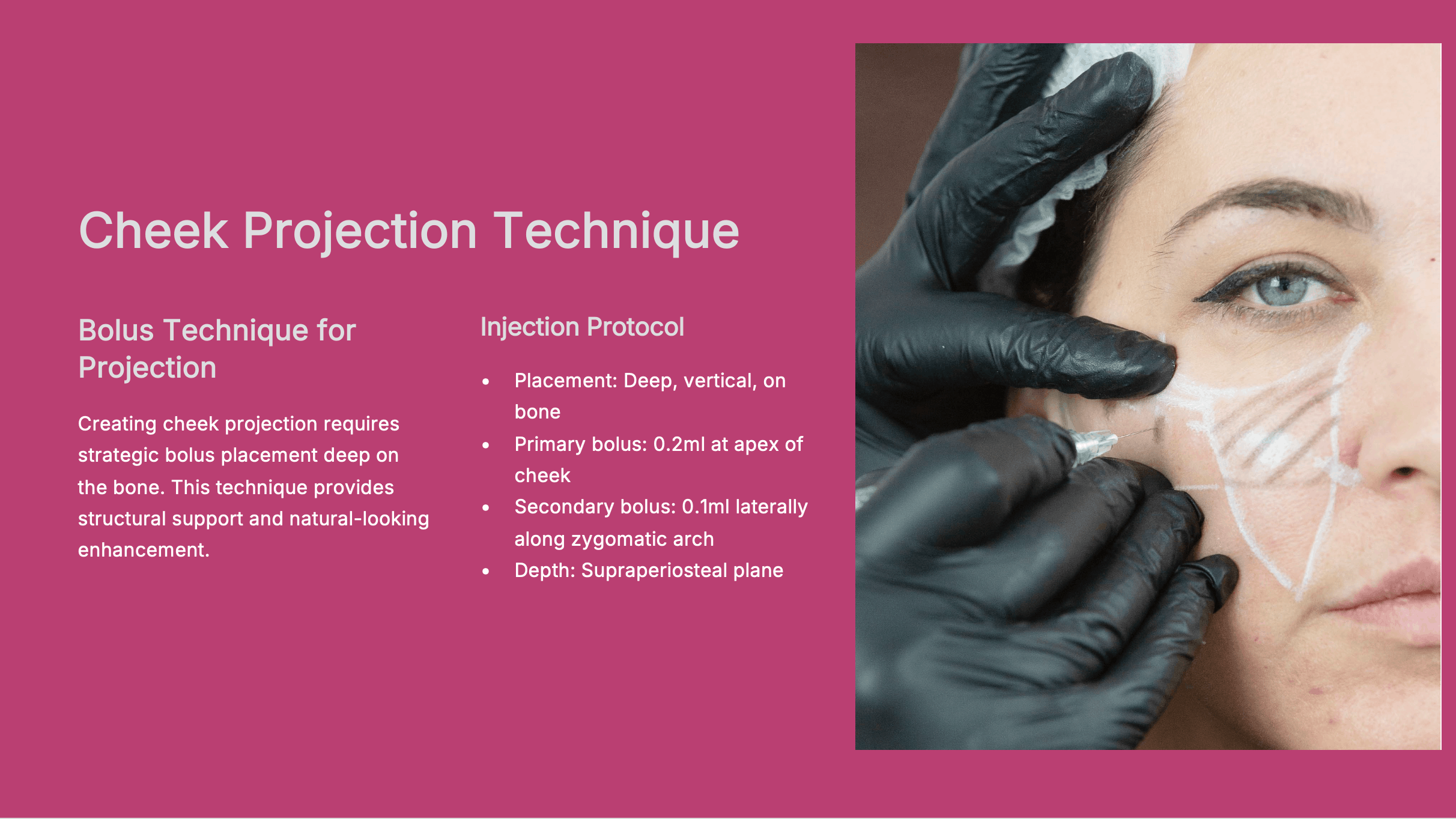
A Structural System for Mid-Face Assessment and Delivery
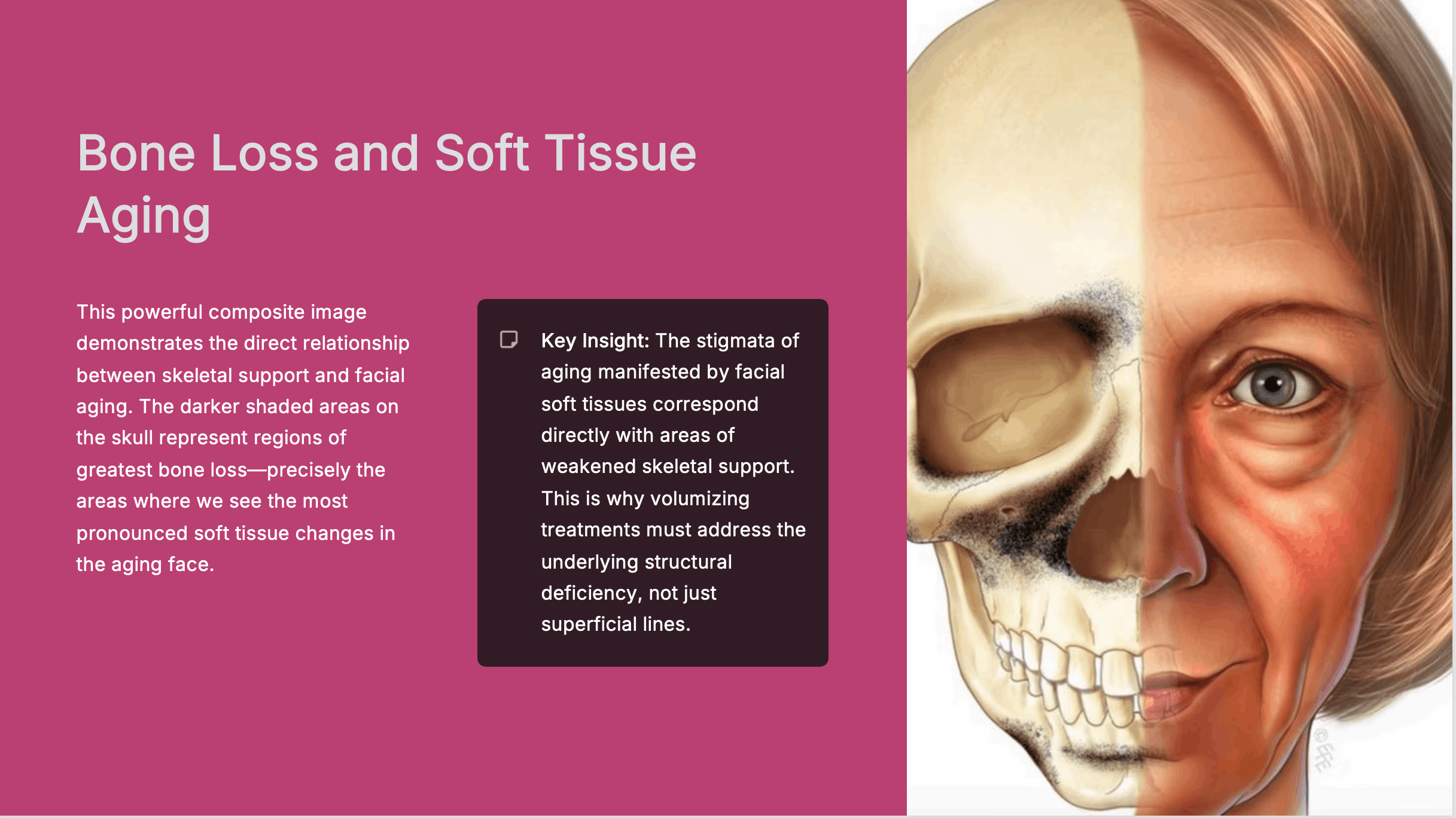
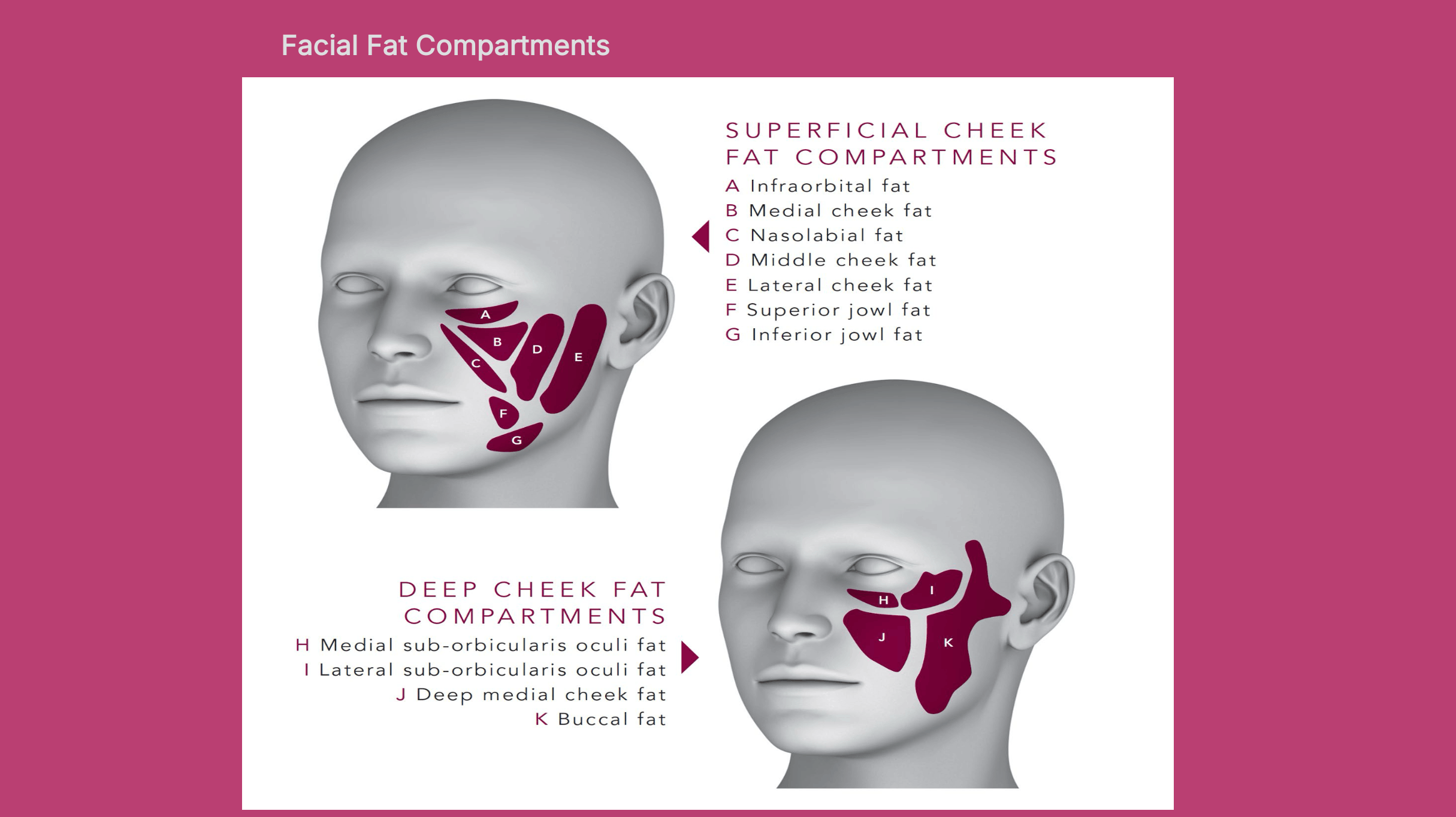
What you receive inside the Mid-Facial Masterclass is not simply cheek injection training — it is a structural facial assessment and delivery system.
- You gain comprehensive online theory covering mid-face anatomy
- Vascular pathways
- Fat pad ageing
- Ligament laxity
- bone resorption and the biomechanics of volume loss
The science of filler evolution and product rheology is explained clearly, so you understand not just which product to use — but why. Cheek volumisation and cheek lifting are differentiated logically, helping you recognise when projection is required and when vector-based lift is more appropriate.
This theory is supported by detailed clinical demonstration videos showing full consultation flow, facial analysis, marking strategy, depth selection, needle versus cannula decision-making and conservative layering techniques. You observe real-time treatment logic — including how nasolabial folds are often improved indirectly through structural support rather than superficial filling.
You also receive the full PowerPoint slide deck for structured revision and future reference, enabling you to revisit anatomical diagrams, ageing patterns and vector mapping as you consolidate learning.
Because mid-face work carries increased responsibility, the module includes Hyalase training and complication preparedness. You are shown how to approach vascular risk zones methodically, how to structure emergency planning, and how to document appropriately. Dissolution readiness is embedded as a professional standard, not an optional extra.
Business Integration & Professional Resources
- Structured consultation templates for identifying mid-face volume loss
- Treatment planning frameworks for phased structural correction
- Documentation and photography guidance
- Ethical positioning of mid-face rejuvenation
- Compliant promotional examples
- Clear guidance around advertising regulations for POMs
- Clear guidance around advertising regulations for POMs
- Patient retention strategies through review and maintenance planning
You are shown how to integrate mid-face treatments logically into upper face toxin and lip consultations — reducing reliance on new patient acquisition and increasing treatment value per consultation in a controlled manner.
What You Will Gain From This Training
In short, you receive:
- Structured online anatomical theory
- Clinical demonstration videos
- Full PowerPoint slide resources
- Hyalase and complication management training
- Consultation and documentation templates
- Business-building and retention systems
- Regulatory guidance for compliant promotion
This ensures you are equipped not only to inject cheeks, but to assess facial structure comprehensively, treat conservatively, and build predictable, sustainable mid-face services within your practice.
Advance Into Mid-Face Treatment With Structure and Confidence
This online programme provides a clear, anatomy-led framework for mid-face volume and lift so you can progress without guesswork or unnecessary risk. Integrate structural treatments confidently into your consultations and build predictable, proportion-led results — all for £99.