
Tear Trough Masterclass
Precision Infraorbital Refinement for Experienced Clinicians
Assess Before You Inject
Before technique is discussed, the module addresses differentiation:
- True tear trough deformity vs. malar oedema
- Pigmentation vs. hollowing
- Fat pad prolapse vs. volume loss
- Ligamentous tethering vs. skin laxity
- Mid-face deficiency masquerading as infraorbital hollowing
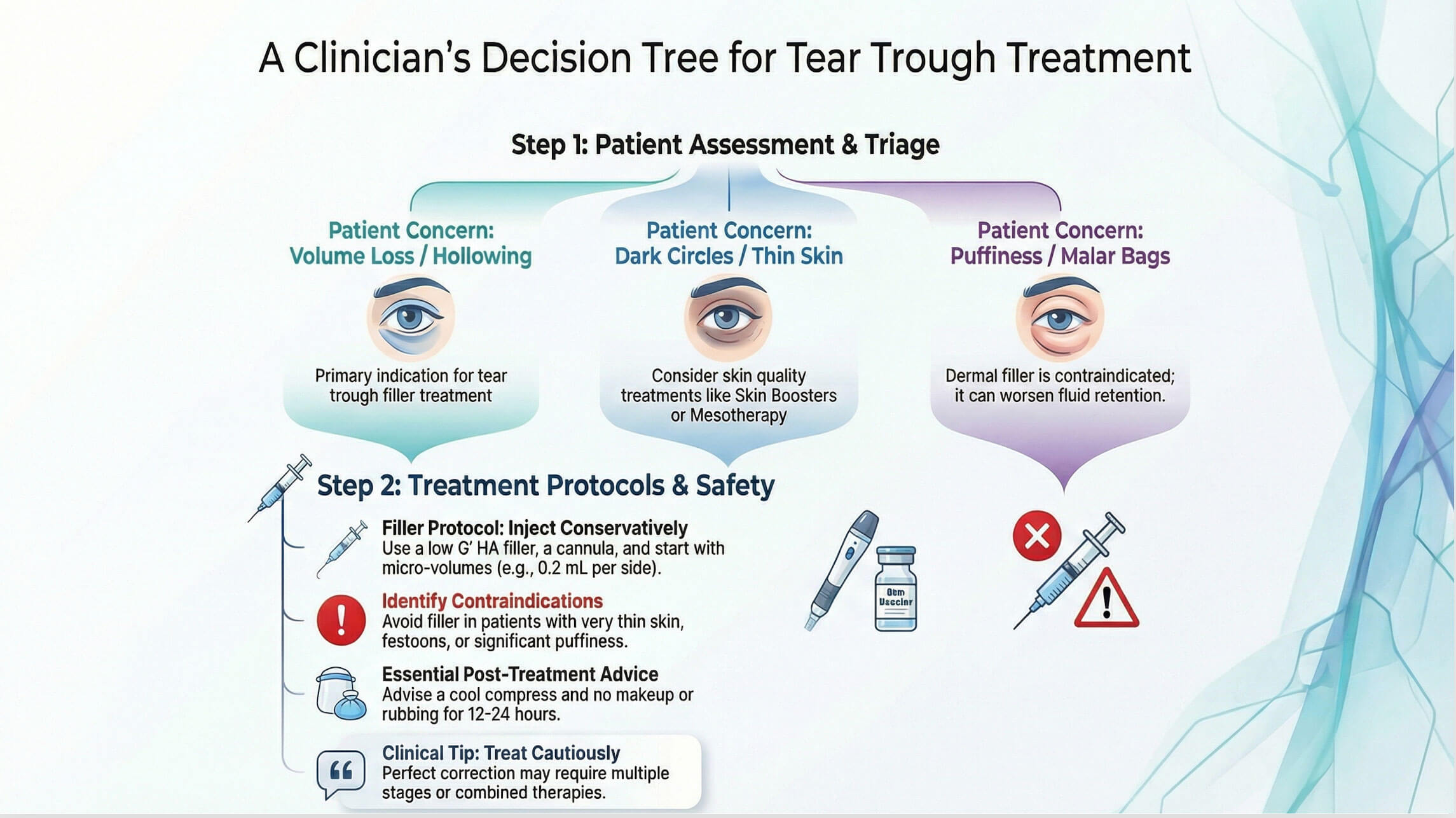
Many tear trough complications arise not from injection error, but from incorrect indication. This masterclass installs a decision-making framework.
What You Will Learn
You are guided through:
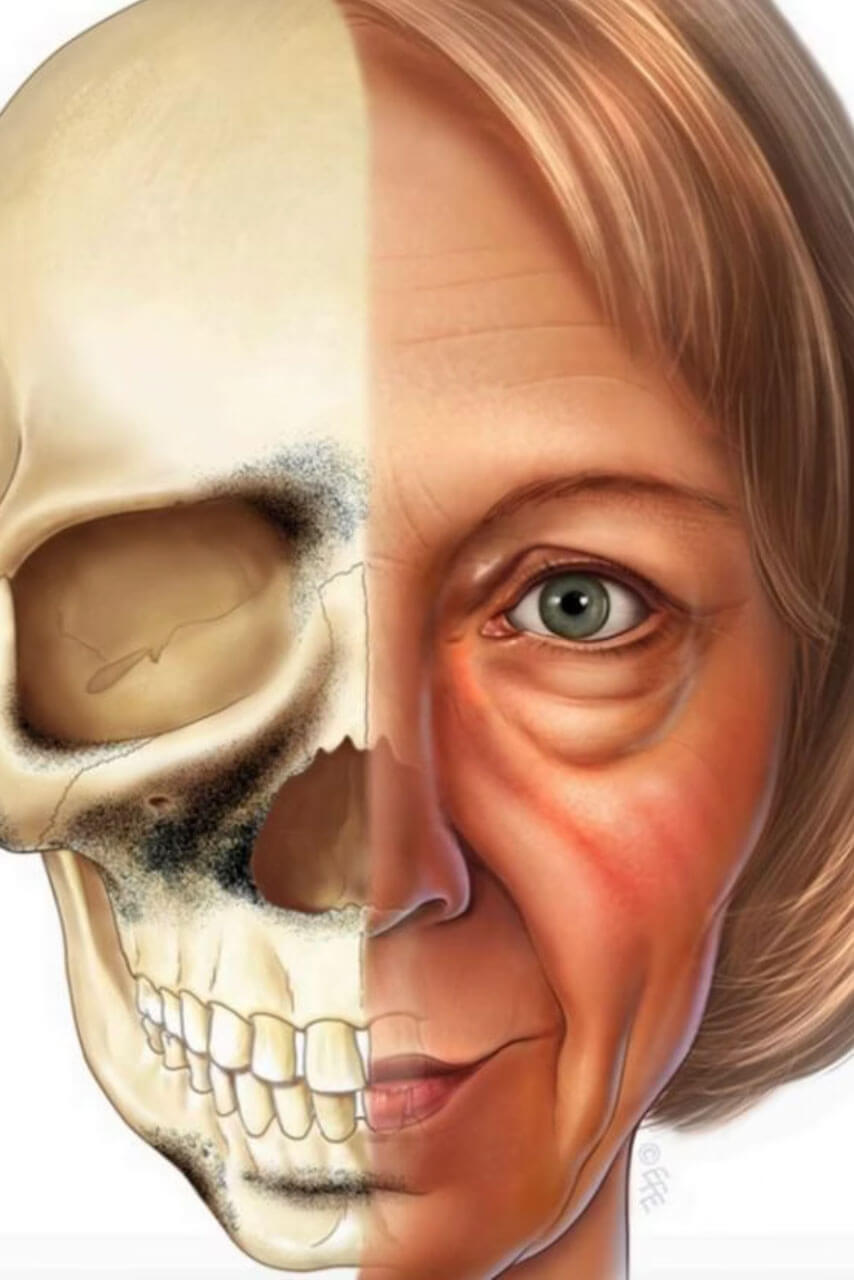
- Detailed infraorbital anatomy and vascular pathways
- Safe depth planes and danger zones
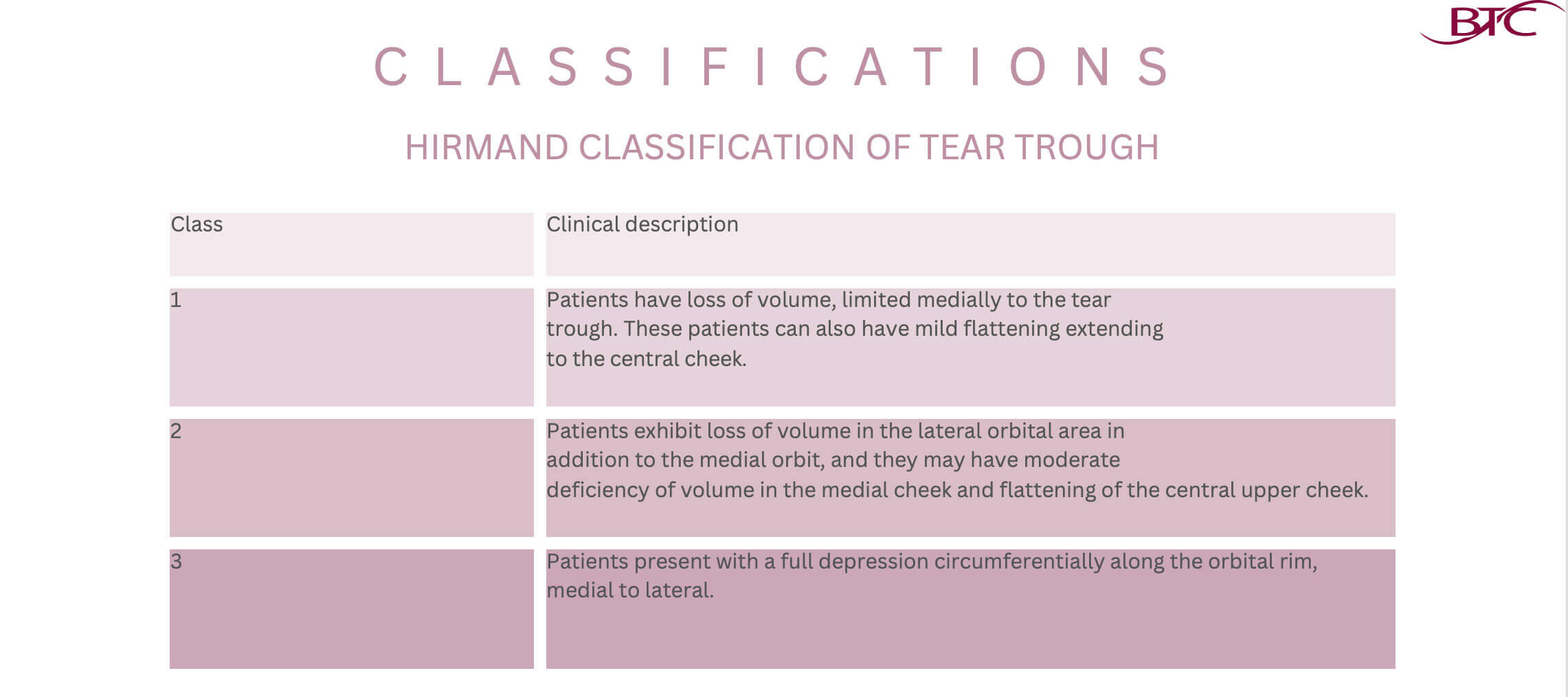
- Patient selection criteria and exclusion factors
- Product rheology appropriate for thin skin
- Low G prime product selection principles
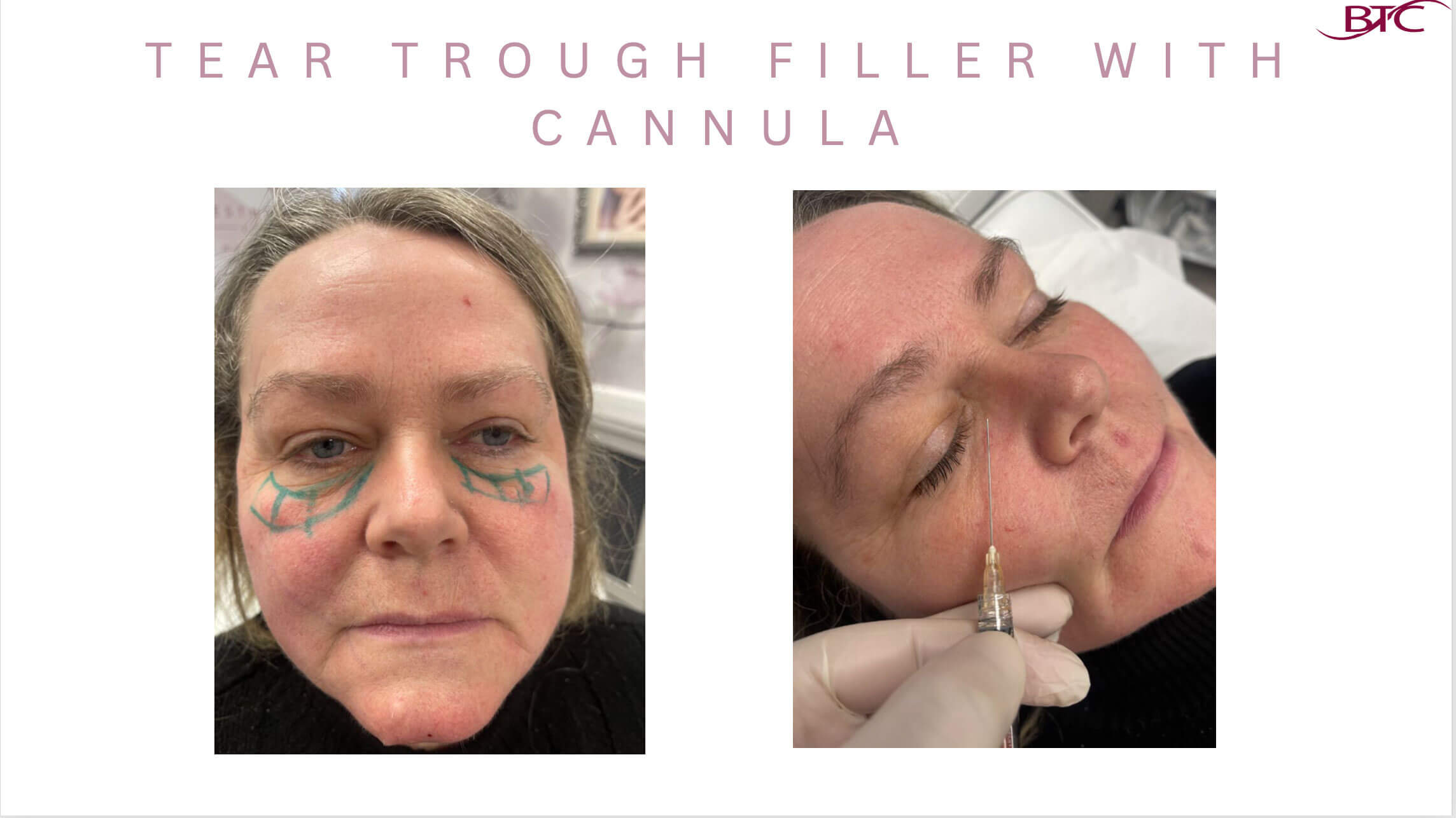
- Cannula vs needle rationale
- Micro-aliquot placement strategies
- Layered correction rather than bolus filling
- Management of oedema and delayed swelling
- Hyalase protocols specific to the tear trough region
The emphasis is conservative. Under-correction is often preferable to overcorrection in this area. Tear trough filler should refine shadowing — not create anterior projection. The module reinforces minimal product use, slow placement, and review-based refinement.
Conservative, Safe, and Responsible
Risk reduction is central. You are taught how to assess infraorbital fat pad stability, when to treat the mid-face first, and when to decline treatment entirely. In some patients, surgical referral is the most responsible decision.
This reinforces professional authority.
From a financial perspective, tear trough treatment is often requested by patients who already attend for toxin, mid-face, or lip treatments. Rather than advertising heavily for new demand, this module enables expansion within your existing patient base — provided assessment is rigorous.
Predictable Outcomes and Value
Patients seeking tear trough treatment are often motivated by:
- Perceived tiredness
- Under-eye shadowing
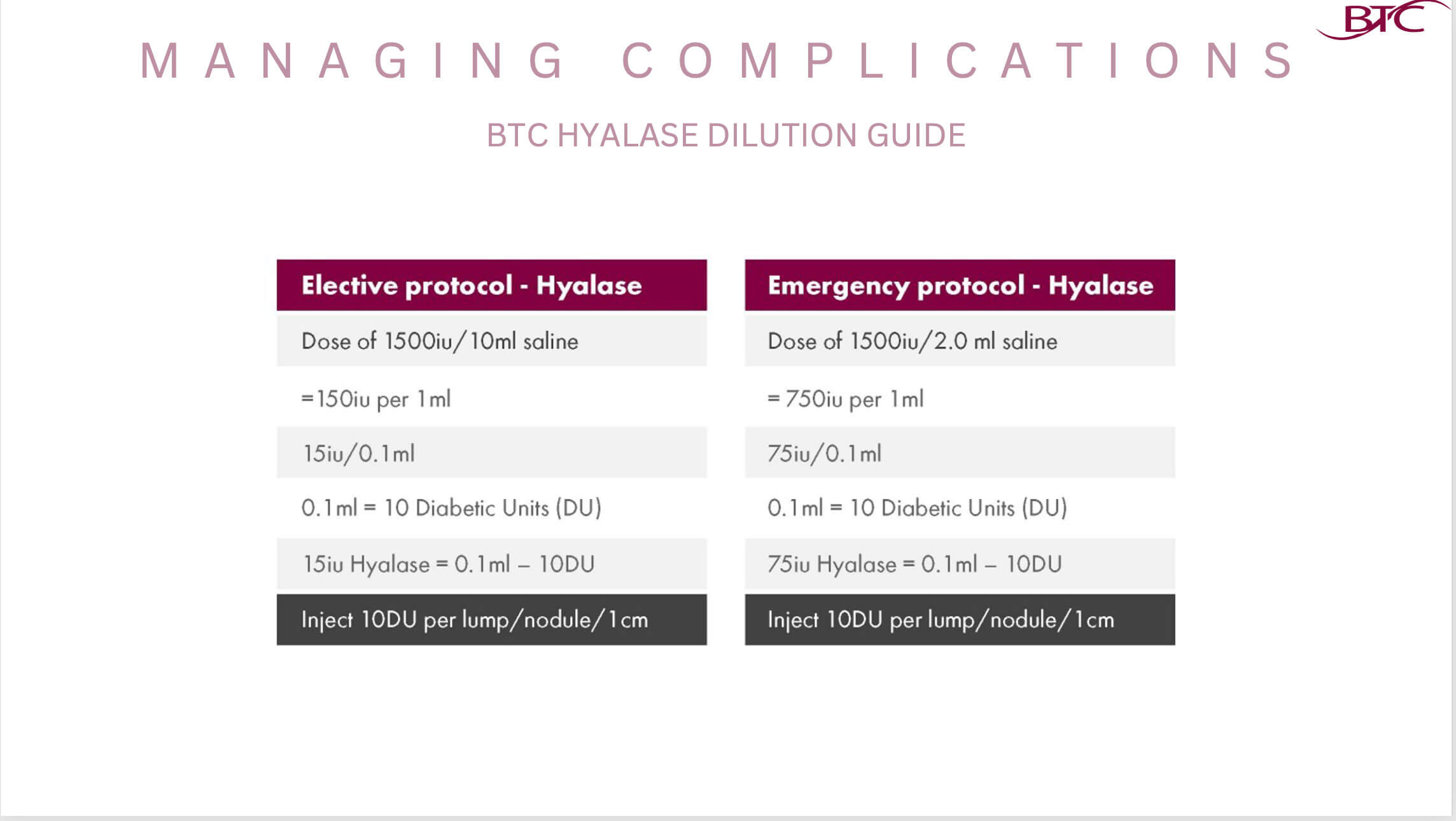
- Early mid-face volume loss
- Professional appearance concerns
When treated appropriately, subtle infraorbital refinement produces high patient satisfaction. When treated inappropriately, dissatisfaction is prolonged.
The masterclass therefore focuses on predictable outcomes, not dramatic change.
Financial predictability arises from:
Comprehensive assessment → Appropriate indication → Conservative correction → Review → Maintenance.
Tear trough filler is rarely a high-volume service — and it should not be. It is a precision service. That precision commands trust and referral when done properly.
The inclusion of Hyalase training is essential. Tear trough work must always be paired with dissolution readiness. Confidence in this region comes from preparedness, not bravado.
What You Become
By completing this masterclass, you become a clinician who:
Differentiates hollowing from pigmentation and fat prolapse
Understands infraorbital vascular anatomy
Selects product based on skin thickness and fluid retention risk
Uses minimal volume with strategic placement
Knows when not to treat
Maintains reversal capability as standard
If you are considering expanding into the infraorbital region, this masterclass represents a controlled step forward.
- A structured pathway.
- A safe expansion of competence.
- A logical investment in long-term precision and professional credibility.
Your Masterclass Toolkit
What you receive inside the Tear Trough Masterclass is not simply an infraorbital injection tutorial — it is a precision-based assessment and delivery framework.
Detailed infraorbital anatomy
Vascular mapping
Ligamentous tethering
Fat pad behaviour
Difference between hollowing, pigmentation and oedema
Patient selection criteria are emphasised heavily, so you understand when tear trough filler is appropriate — and when mid-face correction, skin treatment or surgical referral is more responsible.
Product rheology is explained specifically for the thin infraorbital skin: low G prime selection, low swelling profiles, minimal volume placement and layering logic. You are taught why this area tolerates subtlety — and why restraint is often the safest approach.
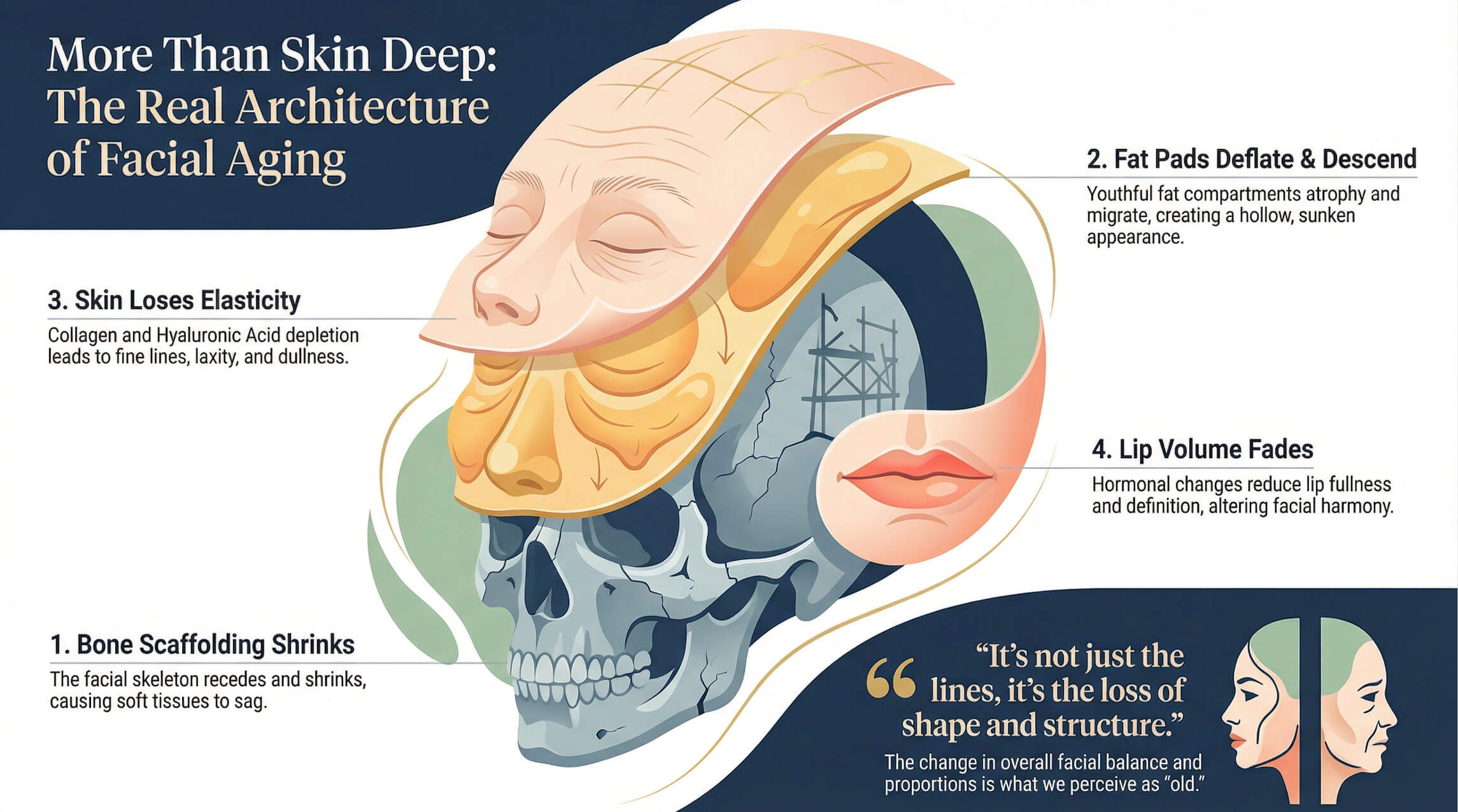
- Dissolution techniques specific to the tear trough
- Management of oedema and Tyndall effect
- Recognition of vascular compromise
- Documentation and escalation protocols
Integrate Safely Into Your Practice
In addition to clinical training, you receive practical integration resources to support safe implementation within your practice.
This includes:
- Structured consultation templates for infraorbital assessment
- Patient screening and exclusion frameworks
- Photography standardisation guidance
- Review and retention planning systems
- Clear expectation-setting scripts
- Compliant promotional examples
- Regulatory guidance regarding POM advertising
You are shown how tear trough treatments integrate logically with mid-face and skin quality procedures, helping you expand within your existing patient base rather than chasing external demand.
Precision, Safety, and Professional Confidence
In short, you receive:
- Structured online anatomical theory
- Clinical demonstration videos
- Full PowerPoint revision resources
- Hyalase and complication management training
- Consultation and documentation templates
- Business-building and retention systems
- Regulatory compliance guidance
This ensures you are equipped not only to treat the tear trough safely, but to assess indications rigorously, communicate realistically, and integrate infraorbital refinement into your practice with precision and control.